

CORD-CHD: Cord Clamping Among Neonates with Congenital Heart Disease
Three Children’s Mercy Kansas City disciplines — neonatology, fetal cardiology and maternal fetal medicine — are collaborating with hospitals across North America.
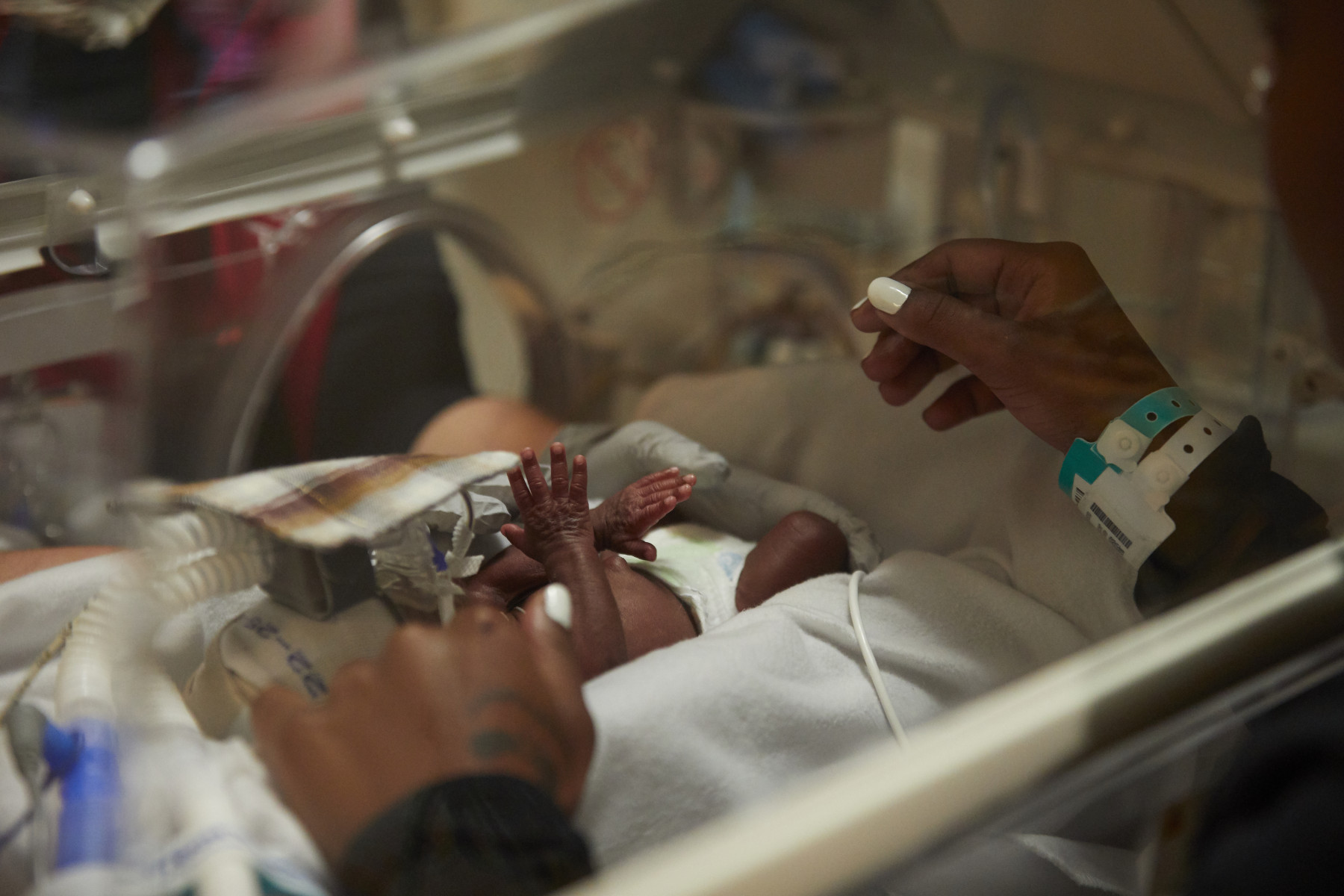
Three Children’s Mercy Kansas City disciplines — neonatology, fetal cardiology and maternal fetal medicine — are collaborating with hospitals across North America to answer an important question: How does delayed umbilical cord clamping impact the neurodevelopment of babies with congenital heart disease (CHD)?
Research has established that delaying cord clamping for 30 to 45 seconds or longer benefits both preterm and full-term newborns. Delayed cord clamping can:
• Preserve the baby’s red blood cells.
• Reduce the need for transfusions.
• Improve iron levels, which reduces the risk of anemia and boosts brain development.
• Decrease the risk of necrotizing enterocolitis.
• Decrease the risk of brain bleeds.
• Improve neurological and developmental outcomes.
Newborns with CHD have been excluded from previous cord-clamping studies because of their complex health variables, including how blood volume affects newborns with cardiac issues. “The reason they were excluded before is the reason we need the study now,” explained Laura Vricella, MD, FACOG, Medical Director of the Elizabeth J. Ferrell Fetal Health Center.
“The already established benefits of delayed cord clamping may certainly be favorable to newborns with CHD,” said Maria Kiaffas, MD, PhD, Director of Fetal Cardiology, who outlined some of the hypotheses the study will be able to test.
“Newborns with certain types of CHD (i.e. cyanotic) do benefit from a robust amount of red blood cells, and the ones that will need surgery may need less transfusions when they start with a good hematocrit. In addition, the decreased risk of necrotizing enterocolitis, a common complication in newborns with CHD, can favorably affect their morbidity and length of hospitalization.”
“These kids are known to be at higher risk for neurological developmental issues,” said John Daniel, MD, MS, Neonatal ECMO Director. “The brain may receive less oxygen as a fetus in certain CHD types, and then newborns live in a persistently hypoxic state. They often go on cardiopulmonary bypass to have their operations. There are a lot of risk factors.”
The new multi-site study, “CORD-CHD: Cord clamping among neonates with Congenital Heart Disease,” is led by Carl H. Backes, Jr., MD, from Nationwide Children’s, with Dr. Kiaffas and Dr. Daniel serving as site Principal Investigators at Children’s Mercy. The study is funded through the National Institutes of Health’s National Heart, Lung and Blood Institute.
The study randomizes participating families into two groups: One where cords are cut after a delay of 30 to 60 seconds and one where cords are cut between 60 and 180 seconds following delivery. Patients will have neurodevelopmental follow-ups at 3-4 months, 9-12 months, and 22 to 26 months of age. The study will recruit participants for five years and run until 2030. With a total sample-size goal of 600, Children’s Mercy is tasked with enrolling 5 to 10 families per year.
“We’ve sailed past our recruitment goals,” said Cheri Gauldin, BSN, CCRC, Senior Research Nurse Coordinator, Children's Mercy Research Institute. The team started recruiting participants in February and has already enrolled 11 families and completed 10 deliveries — the most of any participating site so far.
When the team identifies a potential candidate (around 40% of the center’s deliveries have some form of CHD), they explain the study to the family at an interdisciplinary care meeting. Most families have been familiar with delayed cord clamping, either from previous births or by talking to their obstetricians, and have been eager to participate.
“The Fetal Health Center has done an amazing job,” said Cheri. “They are being very proactive with helping us make sure everybody knows who’s enrolled.” With the cooperation of today’s Fetal Health Center families, the innovative study will ensure future patients get the best evidence-based care possible.
“This study wouldn’t be possible without the center,” agreed Dr. Daniel. “As our center continues to grow, we wanted to introduce research that bridges the gap between neonatology and maternal fetal medicine. This is a truly multidisciplinary study, and our Fetal Health Center is uniquely positioned to offer it to families.”