
How “Mental Toughness” and Multidisciplinary Care Helped Nicholas Exceed Expectations
When Nicholas was diagnosed with cerebral palsy (CP) at age 2, his family was counseled that independent ambulation was unlikely. Now 17, he ambulates independently, competes as a high school para‑athlete in track, and is preparing for college with plans for a career in broadcast journalism.
Nicholas’ progress reflects a combination of intrinsic motivation, family advocacy, and long-term multidisciplinary care. “He’s never been comfortable accepting ‘no’ as a final answer,” said his father, Cameron. “We’ve always approached challenges with the question: How can this work? — and Nicholas has embraced that mindset.”
Early diagnosis and coordinated care
Cerebral palsy presents across a broad clinical spectrum, with variable impacts on movement, posture and function. Nicholas’ early symptoms were relatively mild,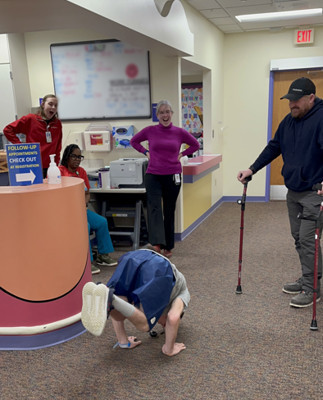 including lower‑extremity stiffness and limited spontaneous movement in infancy. He was evaluated and diagnosed by a Children’s Mercy team and connected early to speech, occupational and physical therapy services.
He also established care with the Children’s Mercy Orthopedic Clinic, where he has been followed longitudinally for gait, growth and functional mobility.
Kathryn Keeler, MD, Department Chair of Orthopedic Surgery, has served as Nicholas’ orthopedic surgeon since he was 6 years old. At that time, he primarily relied on a wheelchair and reverse walker for mobility.
“Nick has exceptional mental toughness,” said Dr. Keeler. “He underwent multiple orthopedic procedures to address hip, leg and foot alignment with the goal of improving functional mobility and reducing long‑term dependence on a wheelchair.”
Surgical intervention and rehabilitation
Over the years, Nicholas has undergone five orthopedic surgeries. Each procedure required months of recovery and rehabilitation, often accompanied by temporary functional regression. Despite these challenges, he remained highly engaged in physical therapy and home exercise programs.
“Every recovery period felt like starting over,” Cameron recalled. “But Nicholas was fully committed to the work. Our role was to support him — he was the one driving the effort.”
Dr. Keeler noted that Nicholas’ progress reflects an evolving understanding of CP management. “While spasticity often receives primary attention, addressing muscle weakness through targeted strength training is equally critical,” she said. “Nick exemplifies how strength-focused therapy and athletics can meaningfully improve function and confidence.”
School-based supports and independence
As Nicholas gained strength following surgery in elementary school, his family recognized that reliance on a wheelchair for school navigation was limiting opportunities to build endurance and independence. Through advocacy and collaboration with the school district, accommodations were made to allow him to ambulate more frequently with crutches.
Now a high school senior, Nicholas actively participates in his Individualized Education Program (IEP) meetings and works with school staff to align academic, athletic and personal goals. He competes with his school’s track team using a racing wheelchair and trains year‑round with creative, adaptive strength and conditioning strategies.
Functional gains and future goals
Nicholas’ commitment extends beyond formal therapy. In clinic, he often challenges himself to exceed baseline gait assessments, and he works closely with coaches to develop off‑season training tailored to his functional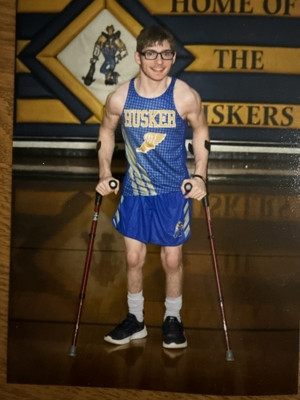 goals. He has also incorporated guitar playing into his routine to improve left‑hand strength and dexterity.
As he prepares to attend the University of Central Missouri this fall, Nicholas is focused on independence and continued growth. He plans to double major in Communications and History, with aspirations in radio, podcasting or broadcasting.
“I want to live as close to a physically typical life as my CP will allow,” Nicholas said. “That’s always been the goal.”
A model of longitudinal partnership
For Dr. Keeler, Nicholas’ story underscores the impact of sustained, collaborative care. “Sports, therapy and surgery all played a role,” she said. “But above all, it’s his discipline and engagement that have made the difference.”
With a demonstrated ability to translate care plans into meaningful, real‑world outcomes, Nicholas’ future goals — academic, professional and personal — are well within reach.