

Wyatt’s Journey
Complex Fetal Urology, Multidisciplinary Care and the Impact of Transplant
Today, Wyatt is a thriving, energetic child with the stamina to enjoy daily activities that once felt out of reach. His clinical course, however, reflects the complexity and long‑term management often required for children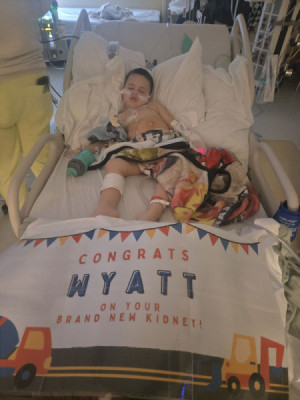 diagnosed with severe congenital urinary tract obstruction.
Wyatt’s care at Children’s Mercy began prenatally. At a routine 20‑week ultrasound, he was diagnosed with marked dilation of the kidneys, ureters and bladder, raising significant concerns for obstructive uropathy and postnatal renal function. He was referred to the Elizabeth J. Ferrell Fetal Health Center, where specialists in Fetal Health, Neonatology and Pediatric Nephrology collaborated closely for the remainder of the pregnancy.
For more than four months, the team provided coordinated counseling, anticipatory guidance and care planning, helping the family understand potential outcomes and prepare for postnatal interventions. Wyatt was delivered at 37 weeks and diagnosed with posterior urethral valves (PUV), a rare cause of bladder outlet obstruction in male infants.
He underwent surgical intervention within days of birth, followed by years of intensive medical management. Despite ongoing nephrology care, multiple hospitalizations and daily medications, his renal disease progressed. Ultimately, he developed end‑stage kidney disease requiring transplantation.
After 607 days on the transplant waitlist — during which several potential living donor options were explored but did not proceed — Wyatt received a directed deceased‑donor kidney transplant from a young donor in his community. The donation, made possible through the generosity of the donor’s family during their own loss, proved life‑changing.
In November 2025, Wyatt underwent kidney transplantation at The Brendan Tripp Elam Transplant Center at Children’s Mercy. Despite the surgical complexity, his postoperative course was smooth, allowing discharge within one week. The clinical improvements were rapid and sustained: increased energy, improved appetite, developmental gains and the ability to participate fully in age‑appropriate activities.
Today, Wyatt continues to do well, with stable graft function and a markedly improved quality of life. For his family, Children’s Mercy represents not only advanced clinical expertise, but also continuity, collaboration and compassion throughout every stage of care.
Wyatt’s case underscores the importance of early fetal diagnosis, multidisciplinary management and timely access to pediatric transplant services — and the profound difference this care can make for children with complex renal disease and their families.