

Managing Complex Pediatric Care Through Multidisciplinary Coordination: Cate’s Journey
Cate’s story highlights both the complexity of pediatric care and the meaningful impact of coordinated, family-centered care for medically fragile patients.
Born prematurely at 28 weeks with Down syndrome, Cate required early NICU support at Children’s Mercy and experienced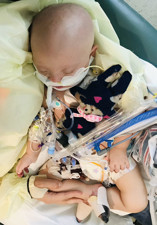 ongoing medical and social instability, including re-hospitalizations and time in foster care.
Just before her first birthday, she was diagnosed with myeloid leukemia associated with Down syndrome (ML-DS)—a rare but highly treatable subtype of leukemia. Her care involved multiple cycles of inpatient chemotherapy over approximately six months, with close monitoring, nutritional support and frequent readmissions between treatments.
While ML-DS carries a favorable prognosis—with reported five-year survival rates around 85%—Cate’s course underscored the importance of vigilant management and multidisciplinary care, particularly in children with underlying genetic conditions and complex social needs.
Shortly after completing chemotherapy, Cate developed severe sepsis, requiring escalation to the PICU with ventilatory support and dialysis due to acute renal failure. She experienced additional complications, including vascular compromise that resulted in partial foot amputation. Despite these challenges, Cate demonstrated remarkable resilience, ultimately recovering renal function and discontinuing dialysis.
Her recovery reflects the strength of an integrated care model, including:
- Timely escalation to critical care
- Close collaboration across oncology, intensive care, nephrology and rehabilitation teams
- Ongoing support from care management, social work and family-centered services
Equally important was the role of consistent, engaged caregivers. Cate’s foster family—Joel Koenig, MD, pediatric urologist at Children’s Mercy, and his wife Karen who later adopted her—worked in close partnership with her care team, helping provide continuity and advocacy throughout prolonged hospitalizations and recovery.
Now cancer-free and thriving at age 9, Cate continues to receive specialty follow-up care to support her long-term health and development.
Her journey also speaks to the lasting impact these experiences can have on providers. Her adoptive father, a Children’s Mercy pediatric urologist, now integrates his perspective as a parent into his leadership in care management and patient-family services—reinforcing the importance of whole-child, whole-family care.
Cate’s case is a powerful reminder that optimal outcomes in medically complex pediatric patients depend not only on clinical expertise, but on coordinated systems of care and strong partnerships with families at every step.